

By Madeline McCurry-Schmidt
I was leading a Girl Scout nature walk last spring, when I heard a heart-warming sound: shrieking children. We were passing under an owl box, and a scout had found an owl pellet full of rat bones.
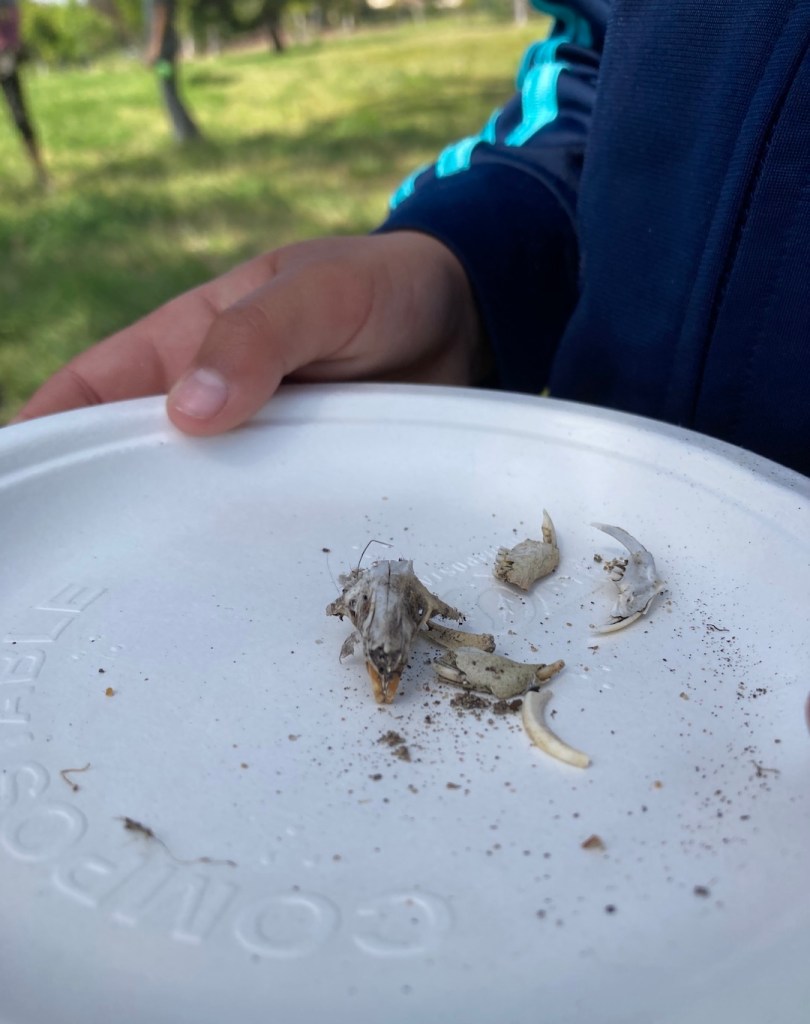
These were shrieks of joy! The nature walk was suddenly a rat bone treasure hunt! The scouts knelt in the dirt and used popsicle sticks to dissect their owl pellets while I led a lesson on owl behavior. It was great.
I love science writing, but sharing science with kids gives me a different way to apply my communications skills. With kids, I have to put extra thought into explaining scientific concepts, and I need to find new ways to keep my audience engaged (tip: rat bone reconnaissance).
I have two kids myself, and I’ve found opportunities to share science lessons with their classrooms and Girl Scout troops. I’ve also led student field trips and outreach events in my role as science writer at La Jolla Institute for Immunology.
Here are a few things I’ve learned about sharing science with kids:
- Bring props! Add excitement to your presentation by bringing in puppets, stuffed animals, or other physical props to aid in a lesson! I’ve passed around feathers and (hard boiled) eggs for lessons on birds. I’ve also had kids pluck guitar strings for lessons on sound vibrations. Bringing props improves student engagement and can spark interesting questions. Here in San Diego, we even have access to The Nat’s Nature to You Loan Program, which I’ve gone through to borrow specimens for Girl Scout presentations.
- Keep the concepts simple! What can you teach a kid—that they will remember to share with a friend at recess? For example, a first grader won’t be able to memorize the names of all four compartments of a cow’s stomach. Nope! For a kid, the takeaway is: “Cow stomachs have four compartments! How cool is that?”
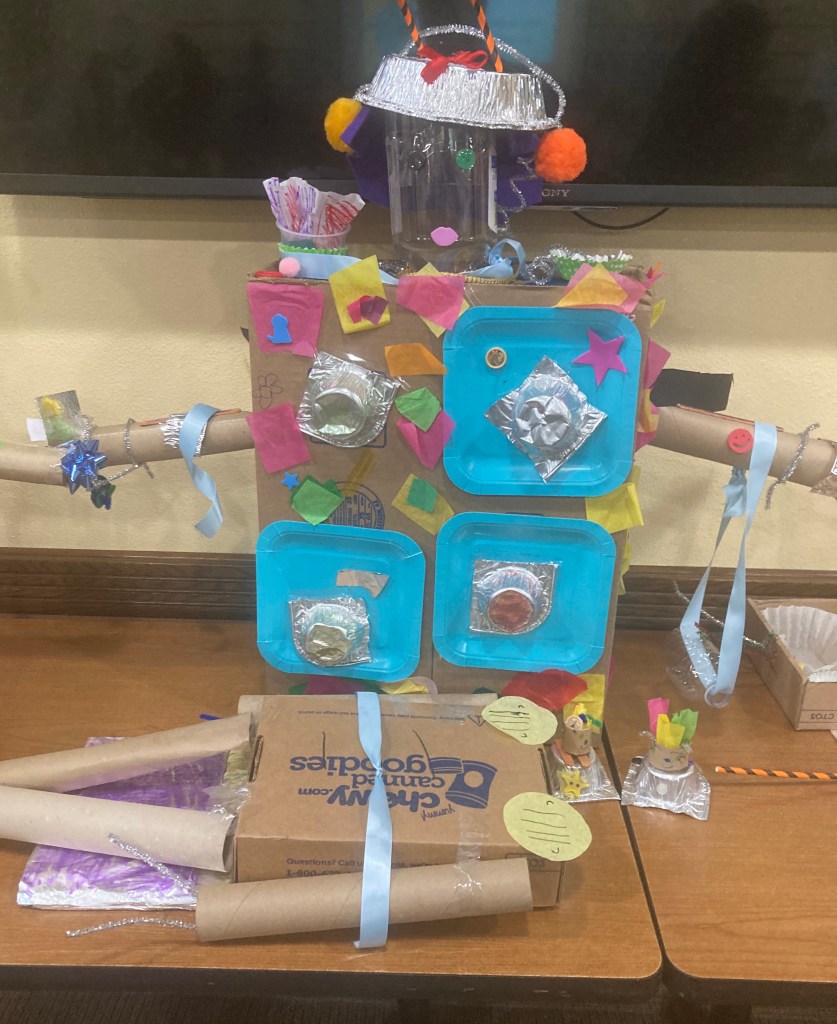
- Involve the kids! Many kids absorb lessons better when they can also sing, dance, or craft! YouTube and Pinterest are great places to find activity ideas. Games are great too! For example, for a Girl Scout lesson about robotics, we played “Simon Says,” but we pretended the players were robots, and we called the game “Programmer Says.” The scouts had a great time taking turns as the “Programmer” and giving commands to their friends.
- Encourage observations and questions! Praise kids for raising their hands, and encourage them to share observations and questions. This helps them build confidence around STEM skills, and it gives you a chance to emphasize the importance of asking questions in science! Even if someone shares a wrong answer, give them credit for making a smart guess and “thinking like a scientist!”
- Embrace your inner teacher! Some classes go a little nuts with questions and off-topic observations. This can take up a LOT of your presentation time. Remember: You have the authority to move the lesson along. I usually give the group a warning like: “We only have time for one more question.” I also use my “school teacher voice” to remind students to stay quiet and wait for their turns to speak.
If you’re interested in presenting science to kids, I recommend talking with parents you know to see if their kids’ classrooms, after-school programs, or scout troops would enjoy a guest speaker. Many teachers are grateful for volunteers who can present science curricula in a fun way.
You can also take small steps to practice giving science presentations. Rather than putting together a whole lesson, see if you can visit a classroom to read a science-related book. (I’m a big fan of Rosemary Mosco’s Butterflies are Pretty…Gross!)
If you work in a lab or research institute, you might also have opportunities to help with field trip visits or speak with students at an event like the annual San Diego Festival of Science and Engineering. I encourage science writers to seize these opportunities!
Working with kids can help you develop your communications skills. Plus, maybe you’ll inspire a future science writer!
 SANDSWA