

By Swetha Kasetty Ramakrishnan
SANDSWA invited us to tour the renowned Scripps Institution of Oceanography at UC San Diego. The event was organized by Brittany Hook, a member of the Scripps Communications team and a SANDSWA board member. We enjoyed an opportunity to visit the Ellen Browning Scripps Memorial Pier, a research facility normally closed to the public. During our visit, we also had a chance to explore two of the oceanographic collections at Scripps, gaining deeper insights into marine life.
On a Monday afternoon, with the sun shining brightly, the tour began at the pier with a wonderful view of the big blue ocean. We were greeted at the gate by Scripps PhD student Anya Štajner, a volunteer with the Scripps Community Outreach for Public Education (SCOPE) program. Anya informed us that the institution uses the pier for a variety of research projects, as well as a launch pad for research boats and scuba divers. The pier pumps in fresh seawater used by Birch Aquarium at Scripps and several experimental labs at Scripps. We learned about water sample collection at the Scripps Pier, where data has been collected daily since 1916! We were thrilled to hear that a public access camera was recently installed underwater to monitor sea visibility. Larry the lobster was reported to enjoy hanging out in front of the camera.
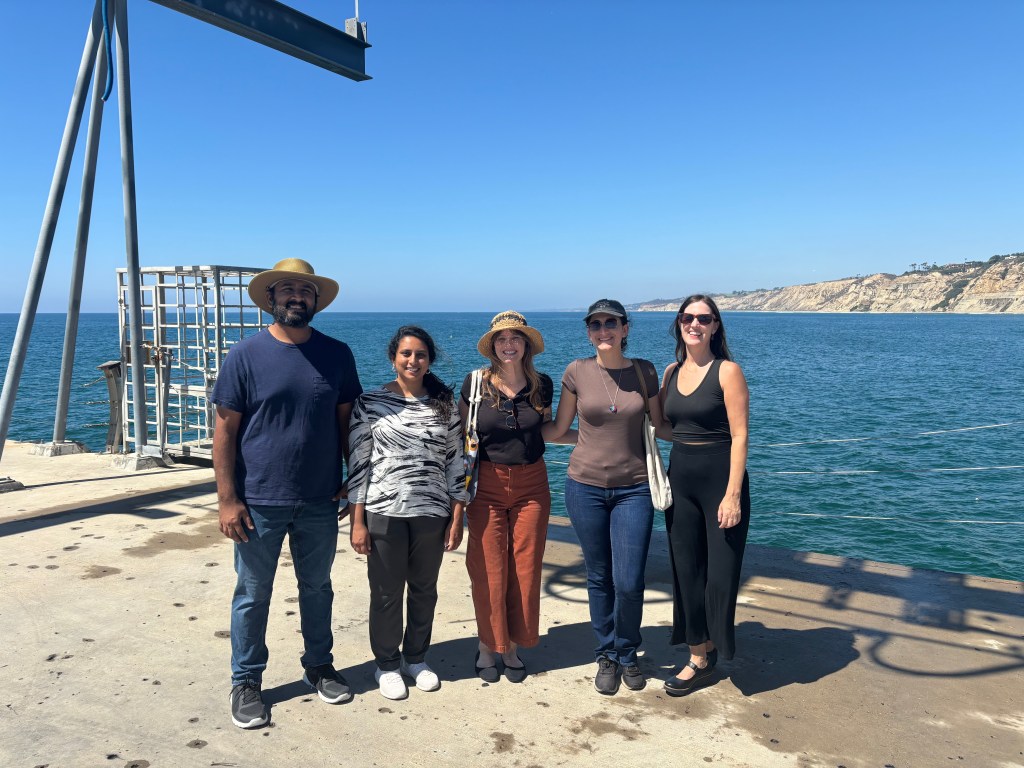
Anya shared details about her research on zooplankton ecology, specifically how these organisms are affected by ocean acidification. She added that she frequently collects her research specimens from the pier and routinely uses the boats. As we started making our way back to the pier entrance, Brittany pointed out a structure that looked like a perch. It was an osprey nesting site, and although though currently vacant, you can see the nest and the surf line on the webcam located here.
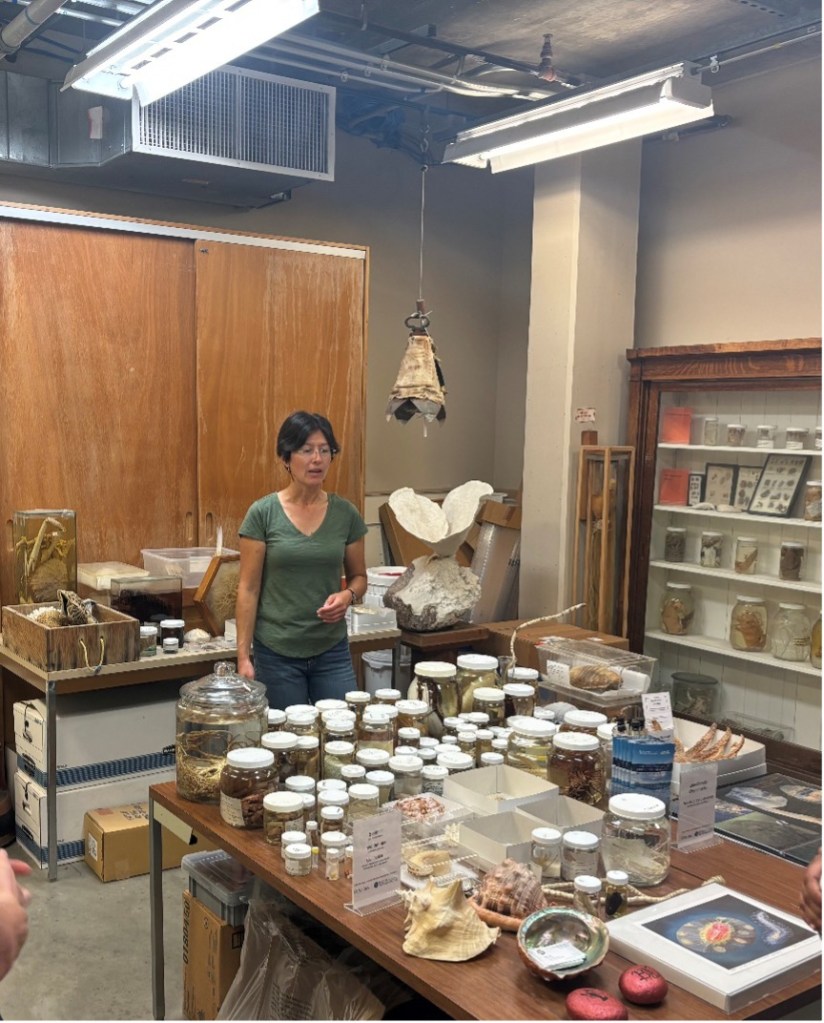
Next was our tour of the Benthic Invertebrate Collection. Benthic invertebrates are small animals that live on or in the bottom of a body of water. As the name suggests, these animals do not have a vertebra or backbone. Scripps has a large collection of benthic invertebrates like clams, starfish, octopuses and worms. Dr. Charlotte Seid, the collection manager, introduced us to a variety of these organisms. My favorites were the tube worms that grow in deep-sea hydrothermal vents.
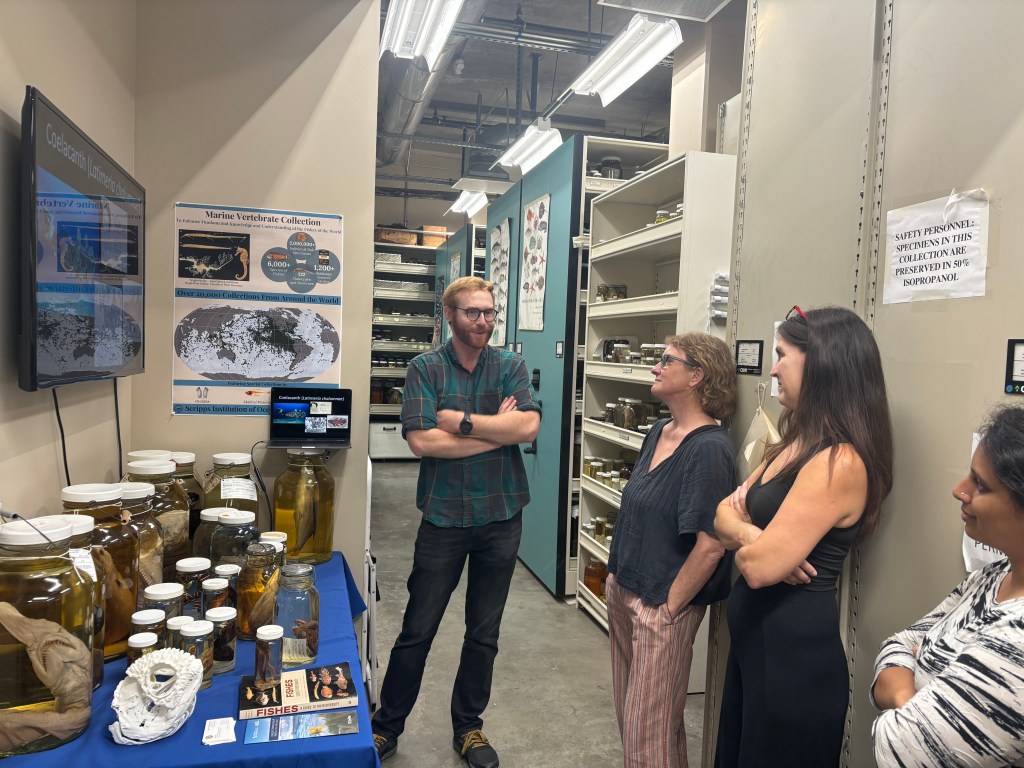
We were enamored by the Marine Vertebrate Collection that was next on the tour. Managed by Ben Frable, the collection maintains about two million specimens of fish. We looked at a wide range of fish, including some extremely elusive species like the anglerfish and oarfish. The specimen collections are mainly intended for research, education and outreach, and are accessible to researchers across the globe upon request. Additionally, there are several in-house research projects in progress. The collections are an excellent resource for conservation efforts and building connections to marine life.
With this, our fun and informative tour of Scripps Institution of Oceanography came to an end. Learning so much about the ocean and its inhabitants left us feeling both excited and enriched. It was wonderful to connect with fellow science enthusiasts, enjoy some sunshine, and have such a memorable experience.
 SANDSWA