
The San Diego Science Writers Association is pleased to kick off the new year by welcoming four new board members to our team! In this Q&A, we checked in with the 2024-26 cohort to learn more about their path to science writing and science communication, what they are looking forward to as SANDSWA board members, and more.
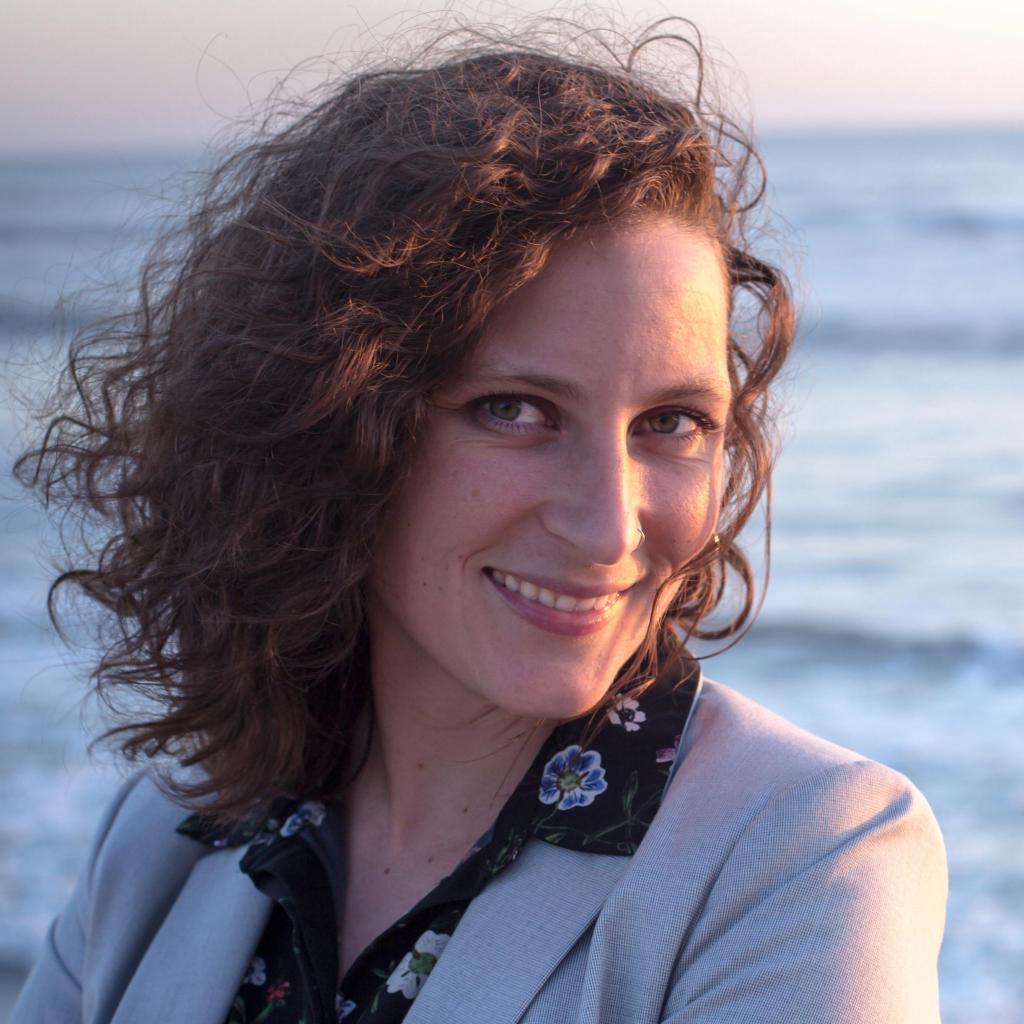
Deborah Bright (she/her/hers)
Senior Manager, Corporate Communications at Acadia Pharmaceuticals
As a new SANDSWA board member, what are you looking forward to most in the year ahead?
I can’t wait to help facilitate best-in-class programming and networking opportunities for SANDSWA members! I’m also looking forward to participating in our book club.
How did you break into science writing?
I started writing while I was in graduate school. Fortunately, the Field Museum of Natural History in Chicago had an opening for a freelance science writer.
What is your best writing tip? / What’s the best writing advice you’ve received?
If you’re looking to break into the field, just start writing. Start a personal blog and write about newly published research; this will get you the writing samples you need.
What do you wish people knew about science writing?
Science writing is not the same as scientific writing! (But should it be? Maybe…)
What do you like to do for fun?
I love line dancing and the horse races. Join me! I have season tickets to SDSU football and enjoy watching the Padres play during the Spring/Summer.
What are you reading/listening to right now?
I’m reading the current SANDSWA book club book: Women in Science Now.
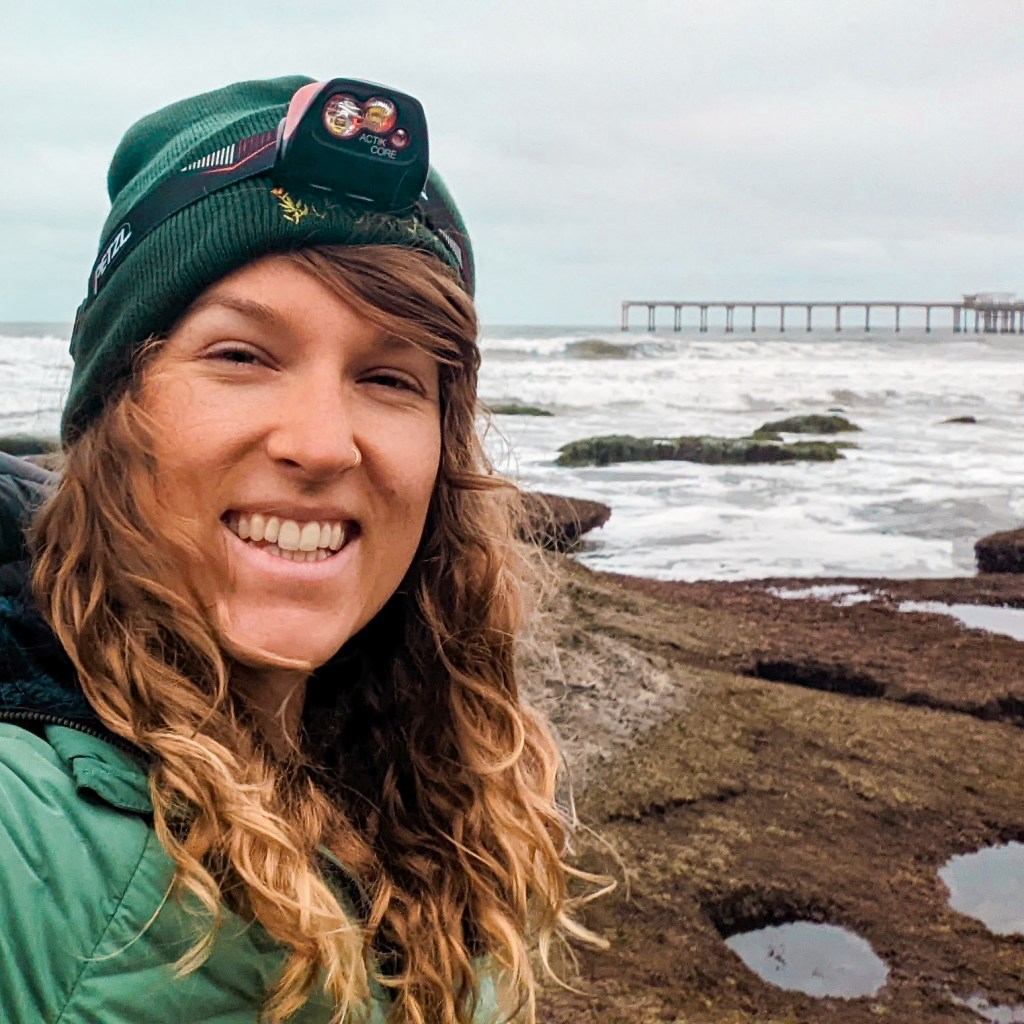
Cypress Hansen (she/her/hers)
Owner & Lead Naturalist at North Star Naturalist
As a new SANDSWA board member, what are you looking forward to most in the year ahead?
I’m excited to serve as a voice for science writers who are exploring other means of science communication, as well as the entrepreneurial folks in our community. Surely I’m not the only one in San Diego who wants to expand into in-person interpretation, short-form video, or whatever, and just needs a community to bounce ideas with. SANDSWA is a space for science writers, yes, but we’re by no means exclusive to folks who type words on keyboards!
How did you get into science writing?
My story is a lot like many sciwriters. I started out as a marine biologist, then watched in horror as my colleagues quite literally ran from—or absolutely bored—our curious lab visitors. By contrast, my favorite moments occurred when I could share my work with anyone curious enough to listen. For a few years, I dipped my toes into nature interpretation and science education, but I never considered myself a writer (I didn’t take a single writing class in college!). Then I discovered the UC Santa Cruz Science Communication program. It sounded perfect, but I had no writing experience! So I spent six months interning for a local newspaper alongside a few of the program’s current students. What I learned there must have worked because I was accepted into the program on my first go. The rest is history!
What is your best writing tip? / What’s the best writing advice you’ve received?
A lot of people understand that science writing is a form of storytelling—a practice as old as culture itself. But deeper than that, it’s about archetypes (Greek for “original patterns”). Whenever I’m writing for any kind of media, I like to look back to the major archetypal storylines (like rags to riches), classic characters (like the healer, comic, or pilgrim), and symbolic tools (like swords, boxes, or bridges) that could help tell the story. These ideas span across cultures and carry a lot of meaning. The more you can recognize their equivalents in the science you write about, the more meaning you can create for your audience.
What do you wish people knew about science writing?
I’m going to expand this question to science communication in general. I wish more young adults knew that science communication is an entire field of careers that science-interested people can pursue. I was led to believe that my only option was to become a researcher—I didn’t know science communication was a thing until AFTER college! I also want more people to know that writing about science is just the tip of the iceberg. Beyond writing, you can photograph, guide tours, record videos, talk on the radio, teach scientists, and create art about science too. Your options are truly as diverse as your skillsets.
What are you reading/listening to right now?
I am currently trying to learn my night skies, so I’m reading an old book called Find the Constellations by H.A. Rey, the writer behind Curious George. The book is written for all ages, it’s so beautifully simple, but it totally stays true to the complex science of astronomy. Rey wrote and illustrated the book in 1954, but his astute use of language hasn’t aged a bit.
I just started The Invention of Nature by Andrea Wulf. It’s all about Alexander Von Humboldt, one of the world’s most important naturalists. I’m only one chapter in, so I can’t speak to the book’s quality yet, but I figured I should learn more about my predecessors as a naturalist myself.
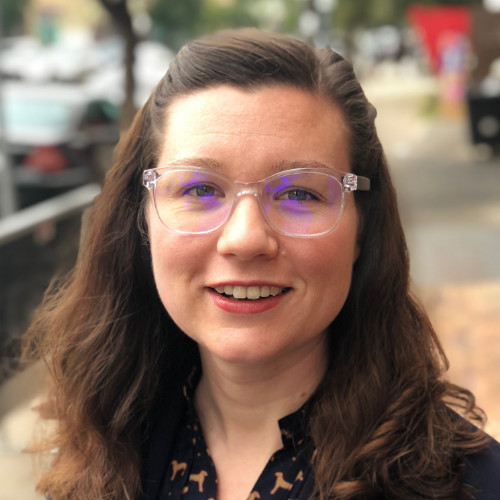
Madeline McCurry-Schmidt (she/her)
Science Writer at La Jolla Institute for Immunology
As a new SANDSWA board member, what are you looking forward to most in the year ahead?
I’d love to attend more in-person events and get to know new folks in the SANDSWA community. I’m very curious to know what SANDSWA members would like to see more of. I’d also love to organize more SANDSWA events where we can bring together science writers and scientists.
How did you get into science writing?
I’ve always loved biology, and I wanted to be an entomologist when I was a kid. I also loved reading and writing when I was growing up (my parents are both writers). I worked in a nematology laboratory in college, and a mentor in the lab suggested I find a way to combine my interests! I also read a book in college called Woman: An Intimate Geography, by science writer Natalie Angier. Angier writes about science in such a fun way—with unexpected metaphors and humor—and I found her work really inspiring! I’ve been in love with science writing ever since!
What is your best writing tip? / What’s the best writing advice you’ve received?
It really helps to read your work out loud! And it’s even better if you can find someone to listen and offer honest feedback.
What do you wish people knew about science writing?
Science writing can mean lots of things these days! Many science communicators are doing great work on social media, through podcasting, and in public relations positions. There are lots of ways to get into this as a career.
What do you like to do for fun?
I like sewing and doing crafts with my kids. I also like gardening, visiting the zoo, and going on nature walks around San Diego!
What are you reading/listening to right now?
I’m reading a fascinating book called Life Isn’t Binary: On Being Both, Beyond, and In-Between, by Meg-John Barker and Alex Iantaffi. I’m also a big fan of the podcast Maintenance Phase, which offers a very funny, very well researched look at the science and psychology behind health and “wellness” trends.
Sarah White (she/her/hers)
Director of Research Communications at San Diego State University

As a new SANDSWA board member, what are you looking forward to most in the year ahead?
I’m looking forward to organizing and attending more nerdy events and professional development opportunities for our members with people who care about sharing expertise with a larger community.
How did you break into science writing?
Through productive procrastination in graduate school. I found I kept wanting to learn about other peoples’ research instead of doing my own so I started a blog and Instagram account to share the results of my deep dives down rabbit holes. Thankfully my advisor was supportive of me taking a science writing for scientists journalism course at my university and applying for the AAAS Mass Media Fellowship!
What is your best writing tip? / What’s the best writing advice you’ve received?
To write like you talk; if you stumble or get lost while reading your writing out loud, then your audience probably will too.
What do you wish people knew about science writing?
That it really takes so many forms! Even plush animal souvenirs’ tags or Snapple bottle cap fun facts can benefit from a science writer’s eye!
What do you like to do for fun?
I’ll take any excuse to try new snacks at Disneyland—it’s my favorite remaining third space!
What are you reading/listening to right now?
GeoGuessr tutorials—as someone who researched teaching and learning, they’re a fascinating example of a collective group acquiring, sharing, and testing their knowledge outside of a classroom.
 SANDSWA